
Where Did the First Nutcrackers Come From
Where Did the First Nutcrackers Come From?
The German nutcracker is unique to the world of German crafts being produced in the Erzgebirge mountain regions of northeastern Germany because they are one of the few crafts that were designed after the ruling class, military personnel, church leaders, and other authoritative figures that existed in Germany and throughout Europe for centuries. This is unusual because most German crafts, particularly those created in the Erzgebirge region, focused their attentions on religious themes, nature scenes, or the common German man and his daily activities. German nutcrackers, however, were symbols of the peoples dissatisfaction with the ruling class and became popular collectibles as a result.
The Erzgebirge mountain region is famous for producing quality German nutcrackers, smokers, pyramids, ornaments, figurines, and cuckoo clocks. Once a thriving community that mined silver and tin for several centuries, mining production began to slow as the natural resources of the mines began to run out. This created a situation for the German families who had been living there for many generations because they knew they had to come up with a new way to support their villages through means other than mining. During the cold, brutal winters of the Erzgebirge mountain region, most people spent their time creating whimsical crafts out of the endless supply of wood that surrounded them. This included making handmade German nutcrackers, smokers, and cuckoo clocks. Many of these traditional crafting methods had been handed down through the generations for hundreds of years.
Rather than abandoning the dying mines and moving to find jobs in the cities, the villagers of the region decided to start producing handmade wooden crafts in hopes of creating a new industry in the mountain region. As a result, families that had once been mining families recreated themselves into craft making families and the Erzgebirge artisan industry began. Today, this part of Germany is known throughout the world as the home to fine quality German nutcrackers, smokers, pyramids, ornaments, figurines, and cuckoo clocks, to name a few.
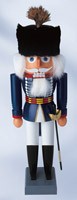 While the first nutcrackers were produced to more effectively and efficiently crack nuts, the first German nutcrackers as decorative pieces were developed somewhere between the late 1400s and early 1500s. Many of these early German nutcracker designs were in the shapes of animals, birds, and people. It was not until the late 1600s and early 1700s that German nutcrackers took on the personas of the kings, soldiers, church leaders, and policemen. As miners and villagers of the Erzgebirge region improved their carving and crafting skills, the German nutcrackers began developing into popular collectible pieces around the region and throughout Germany. People enjoyed using the German nutcrackers that were shaped like the ruling and authoritative classes because it reduced them to the position of mere crackers of nuts rather than possessing any power over their individual freedoms.
As the mines dried up and the cottage crafting industries began to take over, German nutcrackers became some of the most popular crafts for people throughout Germany to own and collect. By the mid-1700s, German nutcrackers were a popular symbol of Germany and just about everyone had their very own German nutcrackers that were mostly used as decorations and centerpieces during the Christmas season. Nuts were a popular treat during this time of year, so being able to both use and display German nutcrackers at Christmastime became a fast tradition in Germany. By the 1800s, German nutcrackers were created to represent and vilify many of the leaders and authority figures of the day. With their typical teeth-bearing grins, many artisans fashioned their German nutcrackers after unpopular kings, cruel religious figures, mean police officers, and even world famous figures, such as Napoleon. Many German nutcracker artisans took the opportunity to express their own social commentaries through the designs of their particular German nutcrackers.
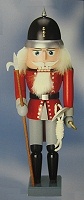 While wildly popular in Germany, the German nutcracker did not experience worldwide notoriety until the late 1800s with the release of the Tchaikovsky ballet The Nutcracker Suite in 1892. The original nutcracker story came from the E.T. Amadeus Hoffmann fairytale novel, Nussknacker und Mausekonig or The Nutcracker and the King of Mice, in 1816. In 1845, French novelist Alexandre Dumas adapted the story and made it into a play that children could understand and enjoy. This popular story was then revisited in the Heinrich Hoffmann book, King Nutcracker and the Poor Reinhold, in 1851. Tchaikovsky based his famous Russian ballet on the Dumas play because it was a lighter, more optimistic tale of a little girl who dreams of being rescued by the German nutcracker prince who saves her from the evil Mouse King. The ballet remained popular throughout Russian, but did not receive worldwide acclaim until it was performed in London in 1934. From that point on, the ballet and the German nutcracker itself has become well-known throughout the world and fans have been demanding high quality German nutcrackers ever since.
As a result, German nutcracker sales and production have been a booming industry in the Erzgebirge mountain regions of Germany. Handmade German nutcrackers have been produced non-stop and sold to all corners of the world from Germany to Europe to America. While no longer considered symbols of mockery of the ruling and authority classes of Germany, they are now used to honor such figures as kings, soldiers, and police officers. The most popular German nutcrackers still remain today in the form of kings and soldiers, but other designs are also seen. Many German nutcrackers are designed to represent Santa Claus, miners, chimneysweepers, doctors, robbers, and other whimsical representations of the common man. While still made using the exacting standards that were developed hundreds of years ago, the German nutcracker remains one of the most popular and collectible pieces of art that are still being produced in the Erzgebirge mountains of Germany today.